
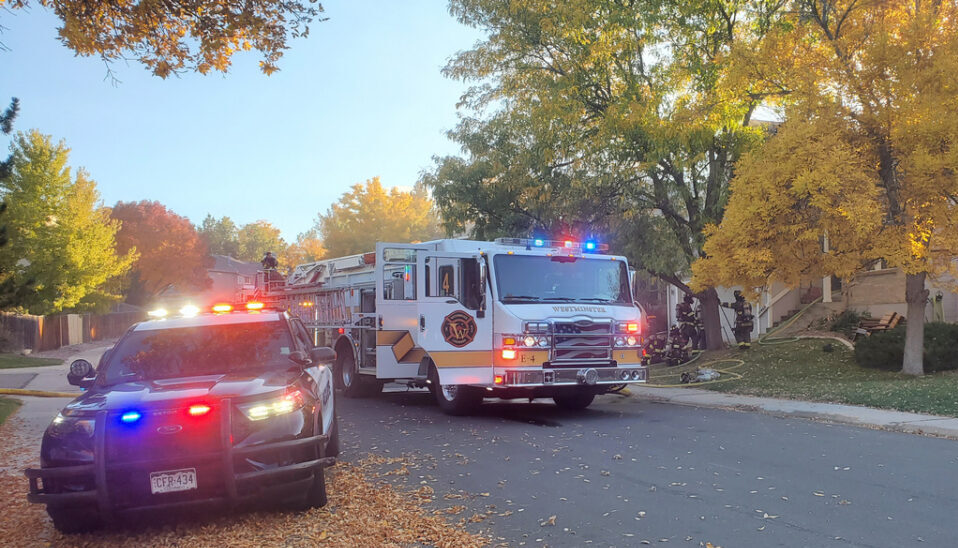
On October 21, 2023 our family’s lives changed forever. A house fire severely damaged our home and we spent the next year and a half recovering from the disaster. It was a very difficult and trying time, but we’ve finally come out on the other side and I think that we are a stronger family now than ever before.
I’m not an expert on the subject, but I thought that I’d share my experience in hopes that some people might have a point of reference if they ever find themselves in this situation. Additionally, this is why I’ve been absent from the blog for so long. We’ve been a little busy. 🙂
How It Happened
My parents were in town for a visit and we were all out at a community Halloween event having fun and enjoying some quality food truck treats. My phone rang and I saw that it was my neighbor, Mike, from a couple of doors down. Immediately he said “Ryan, your house is on fire”. I didn’t believe him. Mike is a known jokester and also a fireman, so that couldn’t be true. But after assuring me that it was not a joke, I rushed home to see smoke coming from the top of our house and a front yard full of fireman rushing around and preparing to enter the house to extinguish the fire.
It’s something that I’ll never forget. You just never think something like this will happen to you. Thankfully, we weren’t home, and nobody was hurt. But still, most of worldly possessions, including our home, were literally going up in smoke in front of my eyes. That site in the headline photo above is what I saw in our front yard.
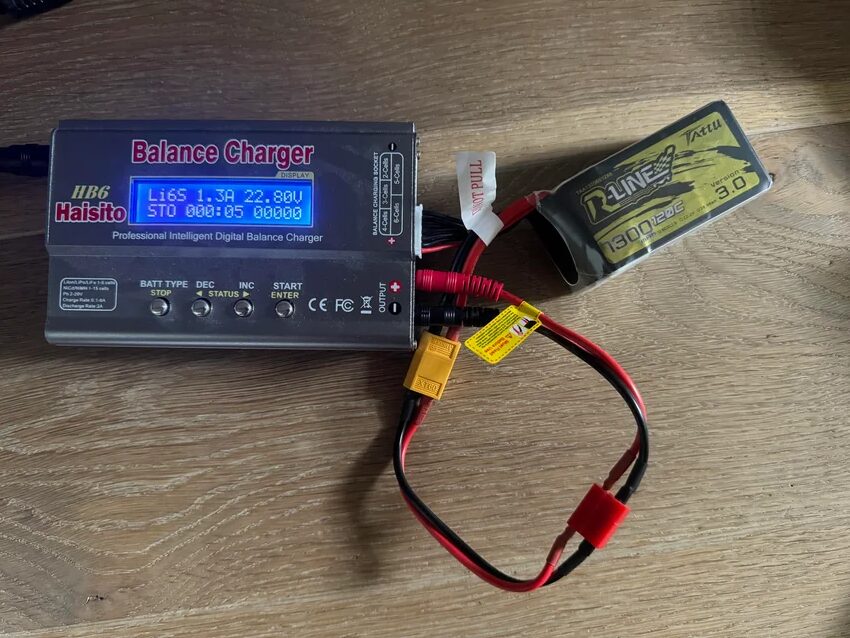
As it turned out, the cause of the fire was a lithium battery malfunction in the basement. My Dad and I had been out flying our RC planes earlier that day. We returned home and put one of the batteries on charge in the basement. The battery was inside a ceramic pot without a lid. I knew of the dangers of lithium batteries, but I didn’t take it seriously enough. I’d been in the RC hobby for a long time and never had any issues at all before. Apparently, either the battery or the charger malfunctioned and sparked the fire.
The Damage


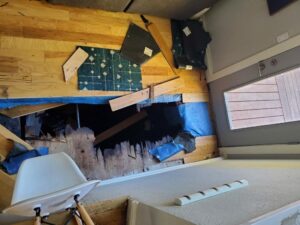
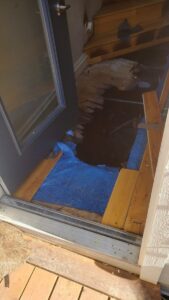

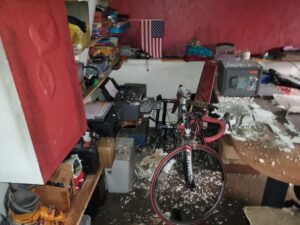
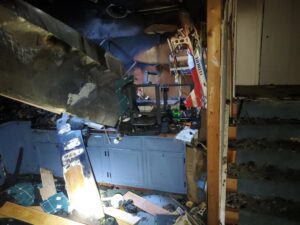
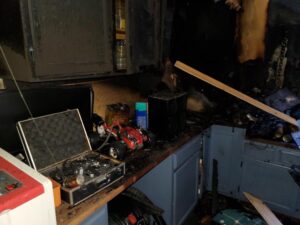
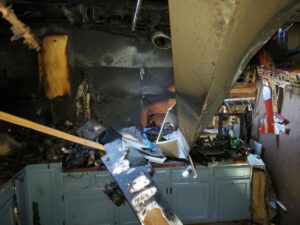
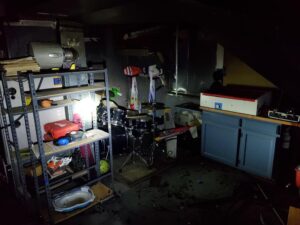
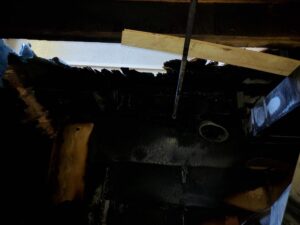

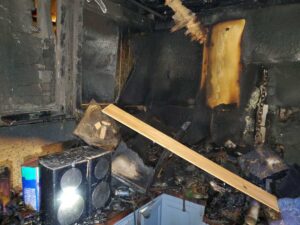
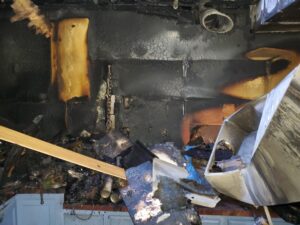
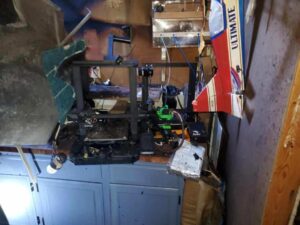
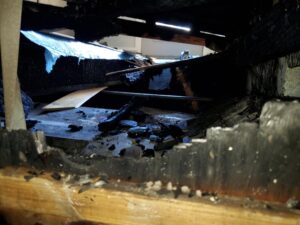
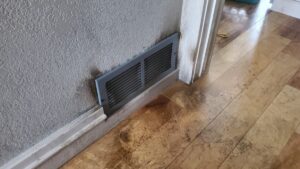
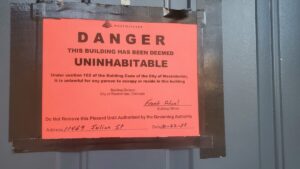
Since we weren’t home, the fire was able to build for quite a while before it was noticed. Our neighbor, the fireman, said that he thought that he smelled something like a fire. He peaked his head outside to take a look around and noticed the smoke coming from our house. He then ran down to our house and banged on the front door to see if anyone was home. When we didn’t answer, he quickly called the fire department and then he called me.
The fire department was there within just a couple of minutes, but by that time it was already too late. The flames had damaged much of the basement and office area and toxic smoke had engulfed the entire house. The fire chief explained to us that everything inside the house was contaminated with the carcinogenic smoke. When a house fire burns, it burns up everything it can, including plastics and other things that generate extremely dangerous fumes. The fire did not actually burn up the majority of our things, but it did contaminate everything. Our furniture, our clothing, our electronics, … everything with any type of porous surface was contaminated with the toxic smoke. The only things that were salvageable were things like plates and glasses in the kitchen and our solid wood bedroom furniture.
Overall we lost about 90% of the things in the house. This was something that I never understood about fire damage before. You always picture things burning up in a fire, but you never really think about the damage done by the smoke. In reality, the smoke damage is usually much worse. That’s the reason that our house had to be nearly completely rebuilt. The smoke not only ruined our possessions, but it also infiltrated the walls, floors, doors, cabinetry, insulation, wiring, HVAC system,… Everything. Our house smelled like a campfire inside for months after the fire, until the mitigation was completed.
Calling The Insurance Company
Call the insurance company as soon as possible after the fire. They can’t begin helping you until you tell them there was a fire. They’ll get an insurance adjuster assigned to your case and begin the process pretty quickly, once you notify them.
Understanding Your Insurance Coverage
Generally, most home insurance policies have (3) separate categories: relocation coverage, contents coverage, and structure coverage. Make sure that you understand your coverage in each of these areas. They are basically treated as (3) separate insurance policies as you go through the process. Don’t be afraid to ask your insurance agent any questions about things you don’t understand.

Actual value, Full Replacement Value, Depreciation… These are all things that you’ll need to have at least a basic understanding of, so you know how to work through the process of getting paid back for things you lost in the fire and things you repurchase after the fire.
Actual Value vs. Full Replacement Value
These are the two different types of home insurance coverage. I would not recommend Actual Value coverage to anyone. Actual Value means that you will only be reimbursed for the current value of any of your items after depreciation. Depreciation is the decreased value of your things over time. The longer that you have something, the less it is worth. Insurance companies have a calculation for everything that you own in terms of how long it takes for each item to fully depreciate (i.e. become worthless).
Full Replacement Value means that you can be reimbursed for the actual value of the item (less depreciation), and you will also be reimbursed for depreciated amount when you replace the item. That is the confusing part to many people. You will not get reimbursed for the depreciation of an item until you show a receipt to prove that you repurchased that item. What a pain.
Call Your Mortgage Company

If you are like most people that own a home, you still have a mortgage. If that’s the case, you will need to contact your mortgage company to set things up for the insurance rebuild of your home. The mortgage company is very interested in the rebuild of their investment, so you’ll need to stay in contact with them over the course of this process. Essentially, they will just be keeping an eye on the project to make sure that the insurance money for the reconstruction is actually spent on rebuilding the house and you are not just pocketing the money.
This is how Wells Fargo handled our fire claim, and I’d imagine that most mortgage companies would be similar:
- They set up an account that will hold all of the funds for the reconstruction.
- Each check from the insurance company will have your name and the mortgage company’s name on it. You will have to sign it and send it to the mortgage company.
- They will hold your funds in an account and release them to you as progress is made on the reconstruction.
- A mortgage inspector will come out a few times during the build to evaluate the “% Completion”.
- You will then be sent a check with that percentage of the funds available.
- You will then need to send those funds to the contractor to pay them.
- At the end, they will do a final inspection and send you the final check with the balance of the money.
Immediate Assistance
Ask for help, insurance can provide a quick lump-sum for living expenses that will later be deducted from your claim. Our insurance company, American Family Insurance (Homesite), provided an initial $5,000 check to help cover basic essentials in the first few weeks.

Don’t be afraid to ask for help. People who love you will want to help. I know it’s hard to ask for help, but this is the time when you will need it most. We always try to help out when people we know are in need, and this was the time in our lives when we were repaid for all of that. Our friends all showed up to help in some way: gave us a place to stay, donated clothing, meals, money, a shoulder to cry on… They even set up a Gofundme website for others to make donations. We really needed and appreciated all of the assistance when we were feeling very overwhelmed.
One other thing worth mentioning… Ask the fire martial and insurance agent if they have any restoration contractors they can recommend. You’ll need to start making some phone calls very soon afterwards.
Temporary Housing
Ask your insurance company how to handle temporary housing. There will be two needs, short term and long term.
In the short term (initial couple of weeks), you’ll need something like a hotel, Airbnb, or VRBO rental. You can probably find that on your own or have friends help, but make sure that it is approved by insurance before you book it.
After that, you will need a long-term rental. That will probably be a leased rental for somewhere in the 6-12 month range. Our insurance company worked with a great temporary housing service called “CRS Temporary Housing”. They were super helpful and I’d recommend them to anyone in this predicament. They helped us find rental houses close by, handled the lease paperwork, and worked out the direct payment of our housing from the insurance company. We never even saw a bill. We only had to pay for utilities.

CRS also provided a complete home furnishings rental service. I’ve never heard others discuss this, but our insurance covered the rental of all of our furniture and basic home goods for the duration of our rental. That was a major stress relief, since we didn’t have to immediately go out and repurchase everything. The rental service was amazing. Not only did they provide all of the furniture that we needed (beds, couches, dining table, etc.), but they also provided the linens for the beds, towels, lamps, all of the kitchen necessities (plates, cups, dishes, silverware, pots and pans, …), trash cans, a vacuum. They provided all of the essentials. The service was also amazing. They came into the rental house and put everything in the house where it needed to go. They didn’t just drop of the furniture and boxes of stuff. They made it really nice for us, including making the beds and hanging artwork around the rental house. We were shocked and amazed. What a service!
Salvaging and Inventorying Contents
Hire a contents restoration company. Any money spent on this contractor should go under the contents portion of your home insurance. They will be very helpful in the initial phase of things.
They can help:
- Inventory all of the items in your home
- Pack up any salvageable items
- Clean anything that’s salvageable including hard surface items and potentially professional clothes cleaning if you decide to keep any clothes.
- Store those salvageable items during the rebuild
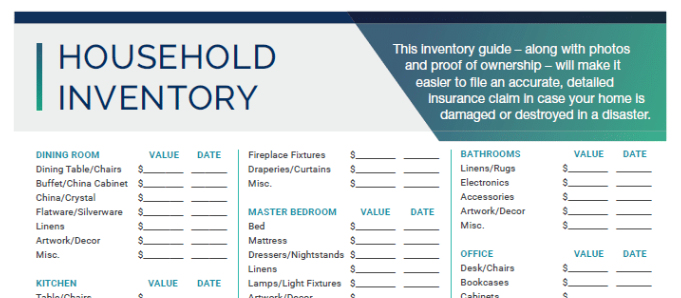
Save whatever you want to. The contents restoration company will help decide what is salvageable and what isn’t. In the end though, anything that is not deemed salvageable will go in a dumpster. After the inventory is completed, let them know if there are any items that you would like to save.
They will generally save any memorabilia type items for you, but maybe you have a recipe book you want to save or some other thing that you want to cleanup yourself. This is your stuff, so don’t be shy. A lot of things are easily replaced, but you might have a few things you’d like to keep.
Hiring a Restoration Contractor
Hire a home restoration contractor, not a general contractor. There is a ton of paperwork that needs to be handled between the insurance agent and the contractor, and you want to hire someone that knows how to deal with that, so you don’t have to! Every detail of the rebuild will need to be documented so that insurance will pay for it.
Red-Tape Galore

Be prepared for red-tape. A home restoration/rebuild is much more complicated than a new build. There will be lots of inspections to make sure that things are rebuilt to the proper standards. Many times the inspectors will also find things that were existing that need to be updated to current codes. It’s a very frustrating process and it slows the rebuild down significantly, so be prepared for this. I’d say that at least 1/4 of the rebuild time was related to waiting on inspections, fixing code violations, etc. It felt like nothing was progressing during these times and it was tough to just wait around.
In the end, we have a better house than we started with because of all of these code related improvements that had to be made, but it was a long, drawn-out process. We have a more efficient furnace and hot water heater, improved insulation (we actually paid a little more for spray foam and it was worth every penny), structurally sound home, completely new electrical wiring, outlets, and even a new electrical panel with arc-flash protection.
Decisions, Decisions, Decisions
There are tons of decisions that will need to be made. It can be a bit overwhelming at times. You are definitely going to want to keep a notebook handy. I prefer to do things electronically, so I used the Google Keep app to keep all of notes organized.
You are essentially building a new house. Here are some of the things you’ll need to pick out:
- Main living space flooring
- Tile for bathrooms
- Countertops
- Bathroom fixtures… Faucets, shower heads, towel bars
- Kitchen cabinets
- Kitchen fixtures
- Appliances… kitchen and laundry
- Light fixtures
- Paint colors

Another thing to consider is making changes to your house during the rebuild. Remember all of those house projects that you never quite got to? Now is your opportunity to do those things. Your house is getting torn down to the bare framing. Some things you’ll be able to change for no charge and some things might have an upcharge associated with them, but you have a contractor on site now, so it might be an affordable way to get the house you always dreamed of. Ask your contractor. It can’t hurt to ask.
These are some things we changed during our rebuild:
- Lower level bathroom layout. We only had to pay for the underground piping modifications.
- Hardwood flooring. We just paid a slight upcharge.
- Spray foam insulation. $2500 adder for the entire house.
- Larger hot water heater. Free. We also could have done a tankless hot water heater for a bit more.
- Whole house water softener and filtration. We just had to buy the unit.
- Installed two small windows in the bathroom for better natural lighting. I did this work, but it would have only been a couple thousand.
- Upsized ductwork upstairs to help with summer cooling. Free.
Also, make sure that you advocate for yourself during the entire process. Remember, the insurance company does not want to help you more than they need to. They want to pay you as little as possible. And the contractors are in this business to make a profit, not because they are kind souls that want to help. If you don’t ask for the things you want and keep an eye on the rebuild to make sure that things are done the way you want them, you will get a subpar rebuild. Don’t be a mean person, but make sure that the people working for you know that they are rebuilding your home for you and you don’t want them cutting corners.
The Timeline

It will take longer than they say. It always does. That is just a general rule when working on a large project with a contractor. As a general rule of thumb, I’d say to estimate 1.5x what they originally say. Our 9 month project turned into 14 months! From October 21st, 2023 to December 21st, 2024 we were unable to live in our house.
Protect Yourself
Insurance
Make sure that you have enough insurance coverage on your house. House values can appreciate quite a bit over time and rebuild costs can also increase significantly. Review your home insurance every year or two to make sure that you have enough coverage if catastrophe strikes! We were properly insured and that took one major stress away from the reconstruction. Just as a point of reference, we have a very modest 2200 sq. ft., 4 bedroom, 2.5 bath house and the rebuild cost was $425k by the time they were finished. I’m pretty sure that you could build an entirely new house for the same cost. Home restoration after a fire is not cheap!
Keep An Inventory
Keep an updated inventory of everything you own. We were lucky enough to not lose everything in our house fire. The contents restoration company was able to inventory most of the things we owned after the fire. However, we did lose some things in the basement and having photos of the area from my basement remodel project helped to identify the things we lost. I’d recommend doing a yearly inventory of your home. A video inventory is probably the easiest. Walk around your house and open every drawer and cupboard to get a good inventory. You might also want to keep a spreadsheet of the high ticket items with model and serial numbers.
Get A Fire Safe
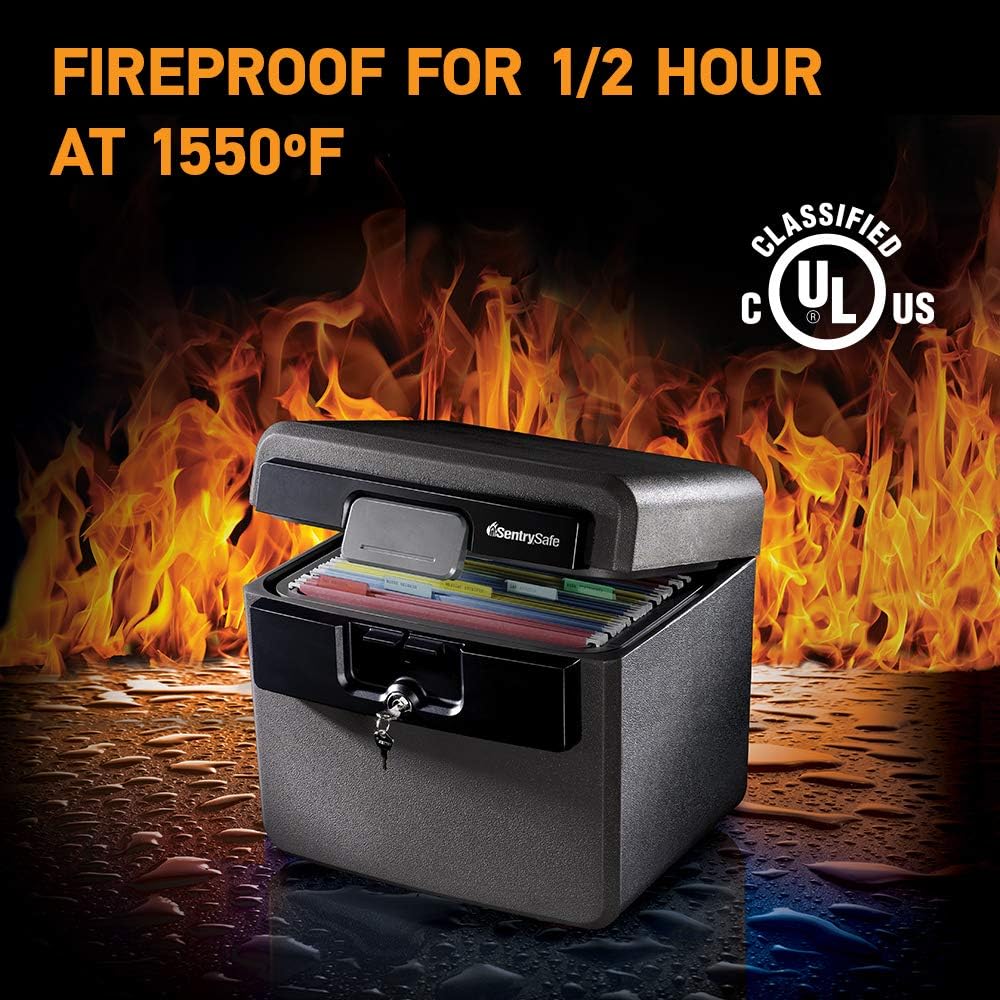
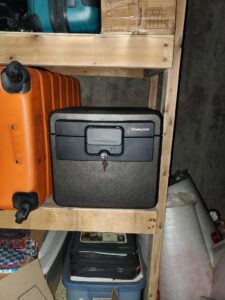
Buy a fire safe now! Our fire safe was only $68 on Amazon and it saved all of our important documents and a mountain of headaches if we had to replace those things. What an amazing bargain.
Charge Batteries Safely
Charge your batteries safely! I know that you might think this is specific to our case, but it’s not. The home restoration companies that we worked with all said that they have dealt with multiple fires related to charging batteries at home. This includes electric cars, batteries for tools, batteries for lawn mowers, phone batteries… the list goes on. Everyone has rechargeable batteries now, so keep safety in mind whenever you are charging batteries. I’ll do a follow up post on safe battery charging in the near future and I’ll post a link here.
I hope this helps a few people!
A house fire is an absolutely terrible thing to have to go through. I know from experience now. I hope that this post helps a few people during that tough time in their lives.
Feel free to message me or comment below if you have any questions. I’m happy to help as best as I can.
Till next time…
Great information. I hope I never have to use it but I appreciate you taking the time to go over everything in great detail.
I truly hope that nobody every has to use this! However, the reality is that there will be others in the same situation, so I hope that this will help them out a bit.
This was such a devastating loss for all of you & was such a long process. This is so incredibly helpful to read.
What a great blog you wrote!!! I sure hope it helps someone else out. It was a long drawn out process for sure. We hope it never happens to anyone.
[…] a lot more familiar with lithium battery safety than I used to be. Unfortunately, we had a house fire that was caused by a lithium battery […]